
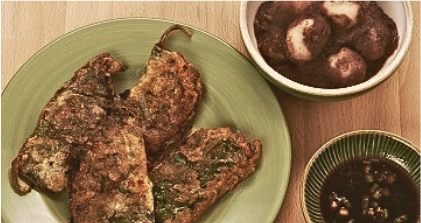
Patjuk and Kkaennip Jeon are Korean holiday treats and Patjuk is a particular favorite for the Korean winter solstice observance of Dongji.
Korean Patjuk ((紅豆汤)
For many thousands of years, astronomical alignments such as the solstices and equinoxes have been seen the world over as special events filled with religious or supernatural significance and ceremonial elaboration. The winter solstice marks the shortest day of the year (when the sun is at its lowest angle at noon). It usually falls on December 21st (as it does this year) or less frequently, on the 22nd. On the winter solstice (and only on that day) of every year the sun's rays shine into the center of the 5,000-year-old mound structure known as New Grange in Ireland. On the equinoxes, the shadowy shape of a mystical snake either slithers up or down the main staircase of the pyramid in Chichen Itza in the Yucatan. At Machu Picchu, Incan priests would ceremonially tie the sun to a large column of stone called the Intihuatana (lit. "the hitching post of the sun") to prevent the sun from escaping. The fact that the hours of daylight increase each day after the ceremony was obvious proof of the power of the ritual. The Korean celebration of the winter solstice is known as Dongji (동지). (It is similar to the Chinese, Dongzhi (冬至) which literally means "arrival of winter." The date is also known as "Little New Year" in Korea. Winter solstice is celebrated throughout east Asia with many variations although some elements (such as the eating of glutinous rice are widely found.
As is true with most religious or cultural celebrations everywhere in the world, food plays an important part. In traditional Korean observations of Dongji specific foods and their manner of use are laced with cultural and symbolic meaning. Patjuk, a sweet red bean and rice ball porridge, is traditionally enjoyed during Dongji. The red beans are thought to chase away evil spirits and sickness and the rice balls symbolize new life. In some places, Koreans would endeavor to eat the same number of rice balls as their age (and in Korea, everyone is one year old the day they are born, and gains a year at the lunar New Year, so if you are "trying this at home," add at least one more!). In days gone by, Koreans are said to have sprinkled the land around their homes with the red bean soup to protect their family from evil spirits. The ritual is based on a Korean folktale about a sinister ghost who is warded off by Patjuk, which he disliked when he was alive. Another traditional belief was that is was a good omen if the weather was cold on Dongji. Warm weather on this day was considered a harbinger of illness and a poor harvest the coming year. Dongji is no longer a major holiday in Korea. Patjuk, traditionally associated with Dongji, is now available in restaurants throughout the year.
You can purchase red bean paste, but if you make it yourself it will taste much better. The recipe is easy and fool proof, but takes a little bit of time to soak and cook the beans. The rice balls just consist of rice flower, water, and a pinch of salt. Although the method of preparation, texture, and presentation are different, Patjuk has the same flavors as Japanese daifuku (大福).
Kkaennip Jeon ( 깻잎전)
The second dish in this month's recipe offering is Kkaennip Jeon (Stuffed Perilla Beef Jeon). It is a treat that is also enjoyed in many celebrations and holidays throughout the year. Kkaennip leaves are similar to the smaller Japanese shiso leaves. The larger Korean leaves have a taste with hints of apple and mint. The leaves are used in many different recipes in Korea, even in their own type of pickled kimchi. Cooking them releases a taste that is somewhat like sesame and indeed they are often translated into English as "sesame leaves" (even though they are not related biologically to sesame). The Kkaennip Jeon are enjoyed with a vinegar-soy dipping sauce similar to the sauce for Japanese gyoza (餃子) and other dishes. The addition of tofu to the ground beef in the filling ensures that the filling maintains a soft texture even when fully cooked. It is important to fry the stuffed leaves on medium to ensure that the filling is completely cooked and the leaves are kept from burning.
Patjuk (Red Bean and Rice Ball Porridge)
Ingredients:
Soup Base:
- 1 cup azuki red beans
- 1/2 cup of white sugar (can substitute brown sugar)
- 1 teaspoon salt
- 1 teaspoon ground cinnamon
- 1 tablespoon sweet (a.k.a sticky) rice flour
- Water
Rice Balls:
- 2/3 cup sweet rice flour
- 1/3 cup short grain (Korean or Japanese) rice flour
- 1/2 cup water
- 1/4 teaspoon salt
Preparation:
The Red Bean Paste:
- Rinse the azuki beans in water to remove debris.
- Soak azuki beans in 4 cups of water in a pot overnight (or at least for 3 or more hours).
- Pour off the water the beans were soaking in and add 4 cups of fresh water.
- Bring beans to a boil and then lower to a simmer.
- Simmer beans for 1 1/2 to 2 hours. The beans should mash easily when done.
- Drain all the water from the cooked beans.
- Puree the beans in a food processor.
- Add the sugar, cinnamon, and salt to the mixture and blend everything together.
- Return the mixture to the pot and cook for another 5 minutes.
The Rice Balls:
- In a mixing bowl, combine the two rice flours, the water, and salt.
- Knead the mixture until it has a consistent dough-like texture.
- Pinch off about a teaspoon of the dough and roll it in your hands to make a small ball.
- Repeat until all the dough is used.
The Porridge:
- Combine red bean paste with 1 cup of water in a saucepan and bring to a simmering boil.
- In a small bowl, mix 1 tablespoon of rice flour in 3 tablespoons of water.
- Stir the rice flour slurry into the boiling red bean stock.
- Add the rice balls and cook for 10 minutes on medium heat (should be simmering).
- Taste the porridge for sweetness, adding more sugar according to your taste.
Kkaennip Jeon
Ingredients:
- 1/2 pound ground beef or pork
- 20 kkaennip (perilla) leaves
- 1/4 cup firm tofu
- 1/4 cup wheat flour
- 3 large eggs
- 1/4 cup finely chopped onion
- 2 tablespoons chopped carrot
- 1 1/2 tablespoons finely chopped scallion
- 1/2 tablespoon finely chopped garlic
- 1 tablespoon soy sauce
- 1/2 tablespoon sesame oil
- 1 teaspoon black pepper
- cooking oil
Preparation:
- Rinse perilla leaves, setting them aside until the other ingredients are prepared.
- Rinse tofu and then wrap it either in cheesecloth, a kitchen towel, or paper towel. Squeeze the wrapped tofu to decrease the water in it.
- Combine the beef, tofu, 1 egg, carrot, onion, garlic, soy sauce, sesame oil, and pepper in a mixing bowl.
- Gently beat the remaining two eggs in a flat container (the egg will become a coating).
- Pour out about a quarter cup of the flour on a plate.
- Coat the underside (dull side) of a perilla leaf with flour.
- Spoon one tablespoon of the filling onto the left-hand side of the parilla leaf and then spread it out evenly to cover the entire left-hand side with the mixture.
- Fold the empty side of the parilla leaf over on the filled side and press lightly.
- Repeat the above steps until all the parilla leaves are used.
- Coat the top and bottom of stuffed and folded parilla leaf with flour.
- Dip both sides of the floured perilla leaf in the egg mixture.
- Fry the egg-dipped perilla leaves on medium heat until lightly browned. Be careful not to burn the leaves.
- Serve with the dipping sauce below.
Dipping Sauce Ingredients:
- 1/3 cup soy sauce
- 1/3 cup rice vinegar (or white vinegar)
- 1 tablespoon sesame oil (or red chili oil (in which case, omit the pepper flakes)
- 1 tablespoon chili pepper flakes (kochukaru)
- 1 tablespoon scallions, very thinly sliced
Combine all the ingredients above and serve the dipping sauce in small individual bowls.
If you have the requisite skills, eat the Kkaennip Jeon with chopsticks (Koreans favor metal ones) dipping them into the sauce first.
At holidays and other events, many different dishes are served together.
Recipe: Thomas Johnston-O'Neill
Photo: Heidi Adams
Cultural Adviser: Jon Choi

- Details
- Hits: 6606
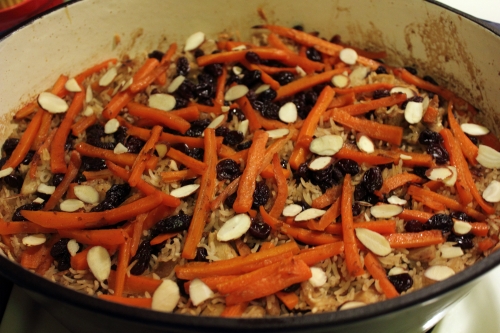
Afghan Qabili Palau is considered the national dish of Afghanistan. Savory with surprising touches of sweetness, Afghan Qabili Palau is perfect for a dinner with guests or a grand occasion.
Many signature dishes from around the world are not everyday food, but instead are foods that are served at special occasions such as weddings and other communal celebrations. In many parts of the world meat is inordinately expensive compared to its price in the U.S. Qabili Palau is from Afghanistan and it is a version of pilaf. Due to the expense of its ingredients, it is not an everyday dish—it is mostly reserved for special occasions. Present day Afghanistan sits between what is considered the East and the West. Its cuisine reflects this. It is a syncretic blending of many different cultural influences. The cuisine employs spices commonly found in South Asia (cinnamon, cardamom and cumin), but more sparingly and without the heat of chilies. It uses other ingredients more commonly found in Middle-Eastern and Mediterranean cultures such as raisins and almonds (or pistachios). Grapes are a major product in Afghanistan (nearly 50% of the land used for fruit production is dedicated to growing grapes!) and many dishes, such as this one contain raisins. Qabili Palau may be made with goat, lamb, beef or chicken. The recipe presented here uses dark meat chicken.
Ingredients:
- 3 cups Basmati rice
- 3 cups chicken broth
- 4 tablespoons light olive oil
- 2 pounds dark meat chicken (thighs or legs) cut into bite-sized pieces
- 2 medium onions, roughly chopped
- 3 large carrots, peeled and julienned (like match sticks)
- 1 cup raisins
- 2 teaspoons ground coriander
- 1 teaspoon ground cinnamon
- 1 teaspoon ground black pepper
- 1 teaspoon ground cumin
- 2 teaspoons salt (optional)
- 1/2 teaspoon ground black cardamom seeds
- 1/2 teaspoon ground cloves
- 1/2 cup sliced or slivered almonds
Preparation:
- Soak rice in water.
- Heat 2 tablespoons oil in a skillet on medium.
- Slowly brown onions (15 to 20 minutes—patience is required for best results!).
- Transfer onions to a medium sized bowl.
- Add more oil to the skillet, raise the heat to medium high and brown chicken, turning frequently. Do this in batches to allow the chicken to brown rather than steam.
- Preheat your oven to 300 degrees F.
- Transfer chicken to the bowl containing the browned onions.
- Add 1/2 cup of water to the skillet and cook the carrots (turn frequently) for about 10 minutes.
- Add raisins to the skillet with the carrots and cook another two to three minutes, stirring frequently.
- Transfer cooked carrots and raisins to a bowl.
- Pour 3 cups of broth into skillet, swish around and then transfer the liquid to a large oven-safe pot.
- Mix all the spices and salt into the pot with the broth.
- Drain soaking rice and gently stir into the pot.
- Bring the pot to a boil.
- Gently mix in the chicken and half of the carrots and raisins.
- Cover the pot and place in the preheated oven for 1/2 hour.
- Remove pot from oven and transfer to a large serving plate.
- Artistically distribute the remainder of the carrots and raisins on top and sprinkle with almonds.*
>ښه اشتیا ولری (kha ishtya walare)—Bon Appetite in Pashto<
Recipe by: T. Johnston-O'Neill
Photo by: Emily Johnston-0'Neill
* Note: if you intend to serve the rice in the pot it is cooked in, you can arrange the carrots and raisins on top before it goes into the the oven and then sprinkle the sliced almonds on top right before serving.
- Details
- Hits: 6519
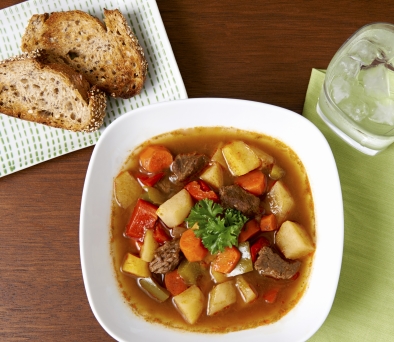
Selected by National Geographic as one of the "Top Ten National Dishes of the World." Like many national dishes, Hungarian Goulash has humble origins connected to rural life of days gone by. Goulash is basically a beef (although pork is also traditional) soup that is uniquely flavored by the generous use of paprika, which could be considered the national spice of Hungary.
The predominant ethnic group in Hungary are Magyars (92% in 2001) and it is the preferred term of self-identification. Goulash is called Gulyás in the Magyar language and the term means "herdsmen." Although the number of cattle in present day Hungary is much lower than what is found in neighboring countries, in 1895 there were nearly 6 million head of cattle (8 times the present number) and herding and the raising of livestock was a primary economic activity. Today the Hungarian Grey cattle (which have formidably large horns) are more often seen in zoos and national parks than in the countryside; in 1975 there were only about 300 Hungarian Grey cows left in Hungary. It is postulated that the symbolic importance of goulash, establishing the Magyars as a distinct ethnic identity, came under the flourishing of Hungarian culture and arts through the rise of the Austria Hungary empire. After the defeat of Austria Hungary in World War I, Hungary lost more than 2/3rds of its territory.
Paprika is a major ingredient in Goulash. Paprika is a powdered spice made from a particular kind of sweet red pepper (Capsicum annuum), commonly referred to as a Bell Pepper. Hungarian paprika comes in many varieties that range from sweet to spicy and is sometimes smoked (although smoked paprika is more common in Spanish cuisine). Until 1920 most peppers were hot peppers until a grower in southern Hungary (Szeged) discovered and propagated (through grafting) a sweet variety. Sweet paprika is made from de-seeded fruits but spicier versions include seeds or are enhanced with a hotter pepper like cayenne. Today, paprika from the Szedged region is considered to be the finest in quality. In 1937 Hungarian physiologist Albert Szent-Györgyi de Nagyrápolt won the Nobel Prize in Physiology or Medicine for, among other things, discovering Vitamin C. Bell peppers, from which paprika is derived, have the 3rd highest Vitamin C content in natural foods, only bested by hot peppers and guavas. Indeed 100 grams of raw sweet red peppers has 213% of the daily recommended value for Vitamin C (yellow peppers have even more), more than twice that of the same amount of a typical orange. Hungarians distinguish at least 8 different varieties of Hungarian paprika. Goulash typically is made with sweet Hungarian paprika, but of course the restless cook is free to experiment.
Goulash recipes vary from cook to cook. The required ingredients are beef (or pork, lamb, and one wonders if tofu could be managed), onions, paprika and water. However many recipes call for the use of fresh green or red peppers, tomatoes, diced potatoes, carrots, parsnips, kidney beans, sauerkraut, caraway seeds, bay leaf, thyme, garlic, wine, vinegar, "pinched" flour dumplings (csipetke) and/or pasta. There is one variety known as "American Goulash" popular in the Midwest that is baked as a casserole and may include lots of tomatoes, elbow macaroni, corn, kidney beans and/or processed cheese. It is also sometimes made with ground beef instead of slow cooked cubed meat.
Hungarian Goulash is typically eaten out of a bowl and accompanied by rustic bread. It can also be served over egg noodles (best are German or other European egg noodles!). Using Hungarian paprika is downright essential (fortunately it is sold everywhere). This recipe can also be prepared in a slow cooker or crock pot, just remember to brown the meat first to be able to enjoy the result of the Maillard reaction (if you don't know what that is, look it up!).
Ingredients:
- 2 pounds cubed stewing beef
- 2 tablespoons light olive oil (not extra virgin) or other high-temp cooking oil
- 2 medium onions, chopped finely
- 3 tablespoons sweet Hungarian paprika
- 4 carrots, peeled and cut into 1/2-inch rounds
- 4 medium new potatoes, peeled and cut into 1-inch cubes
- 1/2 teaspoon caraway seeds
- 1 green bell pepper, seeded and cut in 1/2-inch pieces
- 1 red bell pepper, seeded and cut into 1/2-inch pieces
- Cooked rice, egg noodles or csipetke dumplings (optional)
- Salt to taste
Preparation:
- In a large soup pot or Dutch oven, saute onions over medium-low heat, stirring frequently, until translucent.
- Turn the heat to medium-high and add the meat cubes and brown on all sides.
- Stir in the paprika.
- Add sufficient water to cover the meat.
- When the pot comes to a boil, turn the temperature to low and cover the pot.
- Cook for 1 1/2 to 2 hours (until the meat is tender).
- Add caraway seeds, green and red peppers and potatoes and cook until the vegetables are tender.
- Add water if necessary.
Serve over rice, egg noodles, csipetke dumplings or with a rustic bread.
Recipe by T. Johnston-O'Neill
Photo by Heidi Adams
- Details
- Hits: 5410
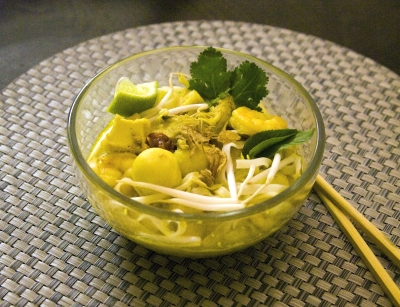
Singaporean Laksa Lemak is a delicious curried soup from the Baba/Nynonya Chinese tradition from Singapore and Malaysia. Laksa Lemak is a perfect dish for a small get-together as it is easy to prepare and your guests can have a hand in the final preparation.
his month's Recipe of the Month takes us to the small island nation of Singapore. The name means "Lion City" in Malaysian, although an older name may have been Pulau Ujong, meaning "island's end." The island is known to have been inhabited (albeit perhaps sparsely) for at least a thousand years. Control of the area changed hands many times.
The island of Singapore was ruled by many different Southeast Asian powers including the Thais, Srivajaya (South Sumatra), Majapahit (Central Java), Minangkabau (West Sumatra) as well as the Sultanates of Johor and Mallaca (the last local power to control Singapore before Europeans arrived. The Portuguese arrived in Mallaca in 1509, challenging the Sultan of Mallaca for power. Three quarters of a century later in 1587 they solidified their grasp of the Malay peninsula by destroying the settlement in Singapore. For the next 200 years, the island was of no particular import to the warring powers. The Netherlands wrested control of the area in the 17th Century. In a very complex series of wars involving many warring parties, the Sultan of Johor was able to regain a great deal of control. The lack of perceived strategic value of Singapore allowed the English to establish a foothold in the area with the arrival in 1818 of Sir Thomas Raffles whose strategies and plans for the area dramatically changed the balance of power in the area as the British Empire seized control (although only briefly in Indonesia). Raffles believed that by establishing a trading post in Singapore he could control the vast trade network that passed through the Straits of Mallaca. In 1891 there were estimated to be only about 1,000 inhabitants when control was officially ceded to England through a treaty with the Malay Sultan of Johor.
A mere 50 years later the population increased 100-fold as Malays, Chinese and South Asians streamed into Singapore to work in the tin mines, rubber plantations, maritime and administrative positions. The descendants of those early immigrants represent the bulk of the present day inhabitants. A majority of the early settlers—and those that settled in Malacca to the north—were Chinese from the south of China. Their direct descendants are now variously called Peranakan or Baba-Nyonya Chinese. Peranakan (Per-a-nak-an) simply means descendent, Baba means "grandfather" and Nyonya means "grandmother." They differ from more recent Chinese immigrants in that Peranakan Chinese blended their traditions with local Malay tradition (anthropologists call this cultural syncretism) and often inter-married with local Malays. In contrast, more recent Chinese immigrants are much more likely to steadfastly maintain their specifically Chinese traditions and notions of identity.
This syncretic history is not only found in clothing and rituals but also in a unique style of cuisine that is often referred to as Peranakan Chinese, Baba/Nyonya or simply Nyonya cuisine. Laksa Lemak is part of this cooking tradition. The word Laksa is of uncertain origin and meaning, but in the Malay language the root meaning of lemak is "fat" although this recipe is relatively low-fat. However, in the closely related language of the Minangkabau (who number in the millions in West Sumatra, Indonesia and also live in the Negri Sembilan region of Malaysia, the term "lemak" or "lamak" also means delicious. The Minangkabau phrase, "iyo lamak bana!" means "Wow, this is truly tasty!" We think you will discover that Laksa Lemak fits that expression to a T (as in, truly tasty). This dish is very suitable for small get-togethers of 4 to 8 people as the soup base can be prepared beforehand. Guests can assemble the rest at the table. All the ingredients that can't be found in a regular grocery store can be found at many Asian supermarkets (like 99 Ranch Market). We've marked these items with an (*)asterisk for your shopping convenience. After you collect all the ingredients, the dish is quite easy and fun to prepare.
Ingredients:
- 1/4 cup corn oil (or light tasting oil of your choice)
- 6 cups chicken stock
- 2 teaspoons grated palm sugar *
- 1 pound boneless, skinless chicken thighs thinly sliced
- 1 pound large shelled and de-veined shrimp (best if tails are left intact)
- 2 cups coconut milk *
- 1/2 pound fish balls (these come in many varieties, we chose pollack) *
- 1/4 pound fried tofu puffs cut in half (they are cubes about 3/4 of an inch on each side) *
- 2 cups bean sprouts (it's important that they are fresh)
- 1/2 package rice noodles (thin or thick, your choice!) *
- 1/2 cup fried shallots (they come in a wide plastic container) *
- 1 bunch fresh Vietnamese/Asian mint leaves (let diners strip the leaves off the stems when they assemble their bowls) *
- 1 bunch fresh cilantro
- 1 bottle Sambal Olek (Chili/Garlic Sauce, now available in regular grocery stores)
- 1/2 lime cut into small wedges
Spice Paste:
- 8 small dried red chilies
- 2 tablespoons dried shrimp (they are very small dried shrimp) *
- 5 shallots or 3 green onions (white part and some of the green)
- 1 tablespoon finely chopped galangal (aka "white ginger") *
- 3 garlic cloves
- 2 large lemon grass stalks *
- 6 candlenuts *
- 1 tablespoon belachan (dried fermented shrimp paste) *
- 2 teaspoons ground coriander
- 1 teaspoon ground cumin
- 1 teaspoon ground turmeric
Spice Paste and Soup Stock Preparation:
- Boil two quarts of water (which will be used for soaking the chilies and shrimp and then the noodles).
- Place dried chilies in a bowl and cover with one cup of boiling water.
- Place dried shrimp in a small bowl and cover with one cup of boiling water.
- Keep water on the stove to reheat for the rice noodles.
- Peel the galanga and the garlic.
- Remove the outer layer from the lemon grass, and cut the root part off and discard.
- Roughly chop the shallots, cloves, lemon grass (white part) and candlenuts.
- Drain the now soft dried chilies and dried shrimp.
- Place all the listed and prepared paste ingredients in a food processor and puree. Add some cooking oil if necessary to make a smooth paste.
- Bring water on stove to a boil once more.
- Put rice noodles in a large flat pot and cover with boiling water. Let the noodles soften in the water. Thin noodles only take a minute or two, wide noodles take longer.
- Pour the cooking oil into a 3 quart sauce pan and add the spice paste.
- Heat on medium high until the oil just begins to crackle.
- Stir paste for 3 to 4 minutes, it will become very nicely fragrant.
- Add chicken stock to the pot and bring to a boil.
- Add sugar to the pot and stir.
- Cook chicken in broth for 4 minutes.
- Add coconut milk and fish balls to soup and simmer for another 2 minutes.
- Add shrimp to soup and simmer for an additional 1 to 2 minutes.
Serving the Laksa Lemak:
- Drain the water from the rice noodles (Making sure first they are fully soft. If not, wait until they are).
- In the large bowls that you will be serving each guest or family member, distribute the rice noodles (filling each bowl a third full).
- The remaining Laksa ingredients can be served on a large platter to be distributed by each individual diner.
Assemble Laksa Lemak in the following order:
- Tofu
- Bean sprouts
- Cilantro and Asian mint leaves
- Push down of the previous ingredients to submerge everything in the soup
- Sprinkle with fried shallots
- Squeeze the juice of 1 large or two small lime wedges into the soup
- Add Sambal Olek hot sauce to taste
- Wait a few minutes for the sprouts, cilantro, and mint to soften a bit
Laksa Lemak is best eaten with Chinese soup spoons and chopsticks.
Before everyone starts, say with enthusiasm, "Makanlah!" (Malay or Indonesian for "Let's eat!") and enjoy!
Recipe by T. Johnston-O'Neill
Photo by Heidi Adams
- Details
- Hits: 6460
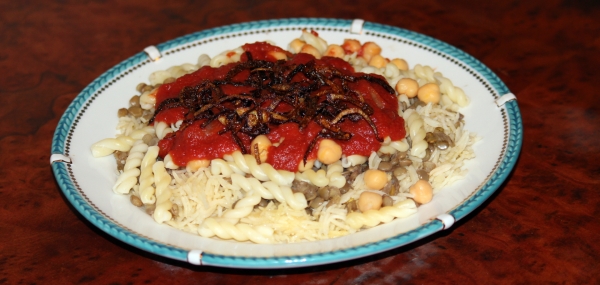
Egyptian Vegetarian Koshari is an comfort food found both in street stalls and restaurants. The ingredients are rather unassuming and seemingly incompatible (rice, pasta and lentils together?). But they conspire to create a surprisingly harmonious and unique taste that will please and satisfy ardent vegetarians and incorrigible meat eaters alike.
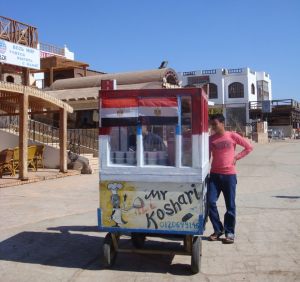
Koshari (Arabic: كشرى) is an essential and beloved dish in Egypt. It is on the menu in nearly all restaurants; there are whole restaurants that sell only Koshari and it is sold by innumerable street vendors who are often referred to as "Koshari Men." While it is a quintessential Egyptian dish, many of its ingredients did not originate there. To those who have not tried the dish, the list of ingredients, and what one would imagine they taste like together is nearly culinarily incomprehensible. Somehow the strange combination works despite what one might think. Koshari has very basic ingredients. It is a food enjoyed by all strata of Egyptian society, but because the ingredients are so inexpensive and the dish is so fulfilling it is held in particular high regard by laborers and workers who exist on modest means. In many places in the world, in part due to the expense of meat and fish, non-vegetarian meals are often considered prestige or special due to their cost. Koshari is normally completely vegetarian (indeed vegan), but due to the unique combination of ingredients, meat eaters are likely to end up happily satiated after a single serving. The basic ingredients are rice (long-grain Basmati being favored), brown lentils (easy to prepare and they don't need pre-soaking), pasta (any kind will do), garbanzo beans (chick peas), lightly spiced tomato sauce and fried onions. The tomato sauce is mildly spiced with hot pepper flakes or cayenne powder. Nearly all the constituent parts (rice, lentils and sauce) are enhanced by sautéing onions in the pans beforehand. A healthy dash of Arabic 7 spice to the sautéing onions just before the other ingredients are added helps things along.
While it does require several cooking pots, preparation is extremely easy. Almost all of the ingredients are cooked separately and are assembled just before eating. Perhaps the most difficult task is caramelizing the onions for the final topping. Apparently (I haven't been to Egypt yet), watching Egyptian street vendors assemble an order of Koshari is half the fun. A deft Koshari man can assemble the dish in mere seconds with a rhythmic and percussive precision that is a marvel to behold. Koshari is assembled in layers. Start with a bed of rice, festoon some lentils over the rice, add pasta, then garbanzo beans. On top of these layers, cover with the tomato sauce and top everything off with some caramelized onions.
Baharaat (Arabic: بهارات) or "Arabic 7 Spice" is the only ingredient you are unlikely to find in a regular grocery story. Any Middle-Eastern grocer will carry it. I have provided a recipe below to make your own Arabic 7 spice. Although there are variations, black pepper, nutmeg, cumin seeds, coriander seeds, cardamom, cloves and cinnamon are commonly used.
Ingredients:
For the Koshari:
- 1 cup brown lentils
- 2 cups Basmati rice
- 1/2 pound pasta
- 1 15-ounce can tomato sauce
- 1 15-ounce can crushed tomatoes
- 2 cans garbanzo beans
- 1 large or 2 medium onions sliced thinly
- 3 cups vegetable stock
- Olive or vegetable oil
- Arabic 7 Spice
To make your own Baharaat (Arabic 7 Spice):
- 2 tablespoons black pepper
- 2 tablespoons paprika
- 2 tablespoons cumin seeds
- 1 tablespoon coriander seeds
- 1 tablespoon cloves
- 1 teaspoon ground nutmeg
- 1 teaspoon ground cinnamon
- 1/2 teaspoon ground cardamom
Preparation and Presentation:
For the Baharaat (Arabic 7 Spice):
- Roast the cumin and coriander seeds in a shallow frying pan on medium heat. Turn frequently until they are light brown.
- Alternatively, roast the seeds in an oven. This method offers more control. Toaster ovens are particularly good for this task.
- Let roasted spices cool. (This is important, you might damage your grinder grinding hot spices (as I did years ago!).
- Place all the spices in a grinder and grind to a fine powder. If you use your favorite coffee mill for this, after you have finished and removed the spices you can grind to a powder a small handful of rice to clean the coffee mill unless you prefer to have spicy coffee!
Note: if you have several pots you can cook the following simultaneously.
For the Lentils:
- Pour a small amount of lentils on a flat surface and inspect for debris like little stones, put the clean lentils in a bowl.
- Saute 1/4 of the onions in the bottom of a pot until they are translucent.
- When the onions are soft and translucent, add 1 teaspoon of Arabic 7 spice. Continue cooking for another minute or so to release the spice flavors.
- Add water and cleaned lentils to the pot.
- Bring the pot to a boil and then reduce to a simmer.
- Add water if needed.
- Cook lentils for 20 to 30 minutes testing them until they turn soft but not mushy.
- Salt to taste.
For the Rice:
- In a pot saute another 1/4 of the sliced onions until they are close to being translucent.
- Add rice and stir continuously until the rice starts to turn opaque.
- Add 1 teaspoon of Arabic 7 spice. Continue cooking for another minute or so to release the spice flavors.
- Add vegetable stock to pot.
- Bring to a boil, cover the pot and reduce heat to low.
- Cook rice for 15 to 20 minutes until done.
For the Pasta:
- Cook pasta according to the package instructions.
For the Garbanzo Beans:
- Drain the beans and rinse them in water.
- In a small pot cook the beans for a few minutes in sufficient water to just cover the beans in the pot.
For the Sauce:
- Pour the crushed tomatoes and tomato sauce in a pot.
- Heat the sauce to a slight boil and add either chili flakes or cayenne powder to your preference. Mildly spicy is perhaps better for this recipe than super hot.
- How long you simmer the sauce depends on your taste. The longer it simmers the smoother it will taste, the shorter it simmers the more fresh and raw it will taste.
For the Onions:
- In a small frying pan or small pot, caramelize the remaining onions. Use sufficient oil to cover the onions. Use the lowest heat possible that still results in the oil bubbling. This will take a long time, 10 minutes or longer. Patience is required. Note that you should remove the onions when they are not fully caramelized because they will continue to deepen in color.
- Drain the onion of oil. If you wish you can lower the oil content by pressing them with paper towels.
Assemble the Koshari in the following order:
- Rice
- Lentils
- Pasta
- Garbanzo Beans
- Tomato Sauce
- Caramelized Onions
Enjoy!
;Recipe by T. Johnston-O'Neill
- Details
- Hits: 5691
Joomla!
Extensions
The Joomla! content management system lets you create webpages of various types using extensions. There are 5 basic types of extensions: components, modules, templates, languages, and plugins. Your website includes the extensions you need to create a basic website in English, but thousands of additional extensions of all types are available. The Joomla! Extensions Directory is the largest directory of Joomla extensions.
Components
Components are larger extensions that produce the major content for your site. Each component has one or more "views" that control how content is displayed. In the Joomla administrator there are additional extensions such as Menus, Redirection, and the extension managers.
Modules
Modules are small blocks of content that can be displayed in positions on a web page. The menus on this site are displayed in modules. The core of Joomla! includes 24 separate modules ranging from login to search to random images. Each module has a name that starts mod_ but when it displays it has a title. In the descriptions in this section, the titles are the same as the names.
Content Modules
Content modules display article and other information from the content component.
User Modules
User modules interact with the user system, allowing users to login, show who is logged-in, and showing the most recently registered users.
Display Modules
These modules display information from components other than content and user. These include weblinks, news feeds and the media manager.
Utility Modules
Utility modules provide useful functionality such as search, syndication and statistics.
Navigation Modules
Navigation modules help your visitors move through your site and find what they need.
Menus provide your site with structure and help your visitors navigate your site. Although they are all based on the same menu module, the variety of ways menus are used in the sample data show how flexible this module is.
A menu can range from extremely simple (for example the top menu or the menu for the Australian Parks sample site) to extremely complex (for example the About Joomla! menu with its many levels). They can also be used for other types of presentation such as the site map linked from the "This Site" menu.
Breadcrumbs provide users with information about where they are in a site.
Page 27 of 33