
Bastante cerca del Gaslamp Quarter, sobre la esquina de 3rd Avenue y J Street, se encuentra el Museo de Historia China de San Diego. El museo ofrece a la gente de San Diego una vista artefactual, pictórica y interactiva de la historia de los habitantes Chino-Americanos de San Diego. La entrada cuesta la módica suma de $2. El museo incluye numerosas muestras culturales, históricas y artísticas tanto como programas educativos establecidas regularmente para niños y adultos. Por una tarifa pequeña adicional el museo también ofrece visitas con un guía de las colecciones permanentes y las exposiciones destacadas y excursiones de los vestigios de los que fue el Chinatown de San Diego. |
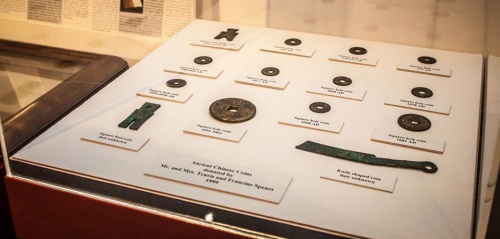
Monedas Chinas Antiguas
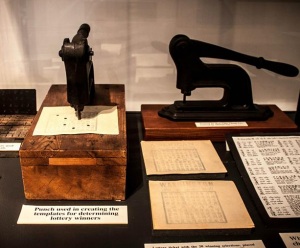
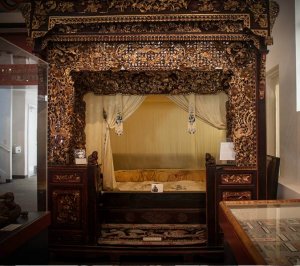
Al pasar las puertas de entrada del Museo Histórico Chino, la mera abundancia de artefactos hace el museo parecer mas pequeño de lo que es actualmente. Un retrato del legendario alcalde honorario de Chinatown a finales del vigésimo siglo, Ah Quin, cuelga sobre la pared izquierda, vigilando sobre las muestras con una mirada paterna. Una gran parte del museo está dedicada a ejemplos bastante grandes de muebles caseros de días anteriores incluyendo una cama de alcoba elaboradamente tallada de la Provincia Sichuan y una exquisita carroza nupcial de la Provincia Shanxi. Maquetas de un pueblo de principios Chinos de pescadores situado sobre la bahía de San Diego con replicas de barcas de pesca conocidas por el nombre "junks" ofrecen al visitante una perspectiva tridimensional de la vida y el sustento de los primeros inmigrantes Chinos. Entre estas muestras mas grandes hay varias fotografías en blanco y negro que llevan a los espectadores del museo a un tiempo cuando el área era conocida como Stingaree (Un sinónimo de Stingray el nombre en ingles del pez raya con púa). El museo hospeda un numero generoso de muestras de cerámica China, viejas monedas y dinero de papel Chino, estatuas de tamaño real y mas pequeños, pinturas, tallados, artículos de casa y comercial, recuerdos militares americanos, artesanía y obras de arte, y hasta equipamiento viejo de lotería China. Afuera en el jardín del museo se encuentra verdor precioso, un estanque con peces koi y una cascada; un lugar perfecto para disfrutar un poco de paz y tranquilidad en el centro de la cuidad. En el camino de salida del museo, se puede parar al contador de regalos donde se pueden comprar una amplia variedad de recuerdos viejos y nuevos.
Durante una gran parte de la historia de San Diego, el Stingaree era un barrio peligroso de mala fama por su crimen, drogas y prostitución. La manera en que termino así tuvo mucho que ver con la perturbación de la vida de su población China debido a la condición política y económica. El aumento del racismo anti-chino después de la fiebre del oro y el ferrocarril transcontinental (construido mayormente por trabajadores inmigrantes Chinos) hizo difícil encontrar trabajo legitimo para Chinos en San Diego o ejercer su comercio marítimo como lo habían hecho durante varias décadas en San Diego. La pesca China incluye abulón cosechado, calamares y crustáceos, pero estas cosas no les gustaba a los Americanos de esa época así que los pescadores Chinos-Americanos con una habilidad para negocios buscaron mercados mas rentables en China. La nacionalidad fue oficialmente negada a Chinos. El Acta de Exclusión China (Chinese Exclusion Act) de 1882 prohibió a los pescadores Chinos de volver a entrar en Los Estados Unidos si sus barcas salían de las aguas territoriales Americanas. El Club Anti-Chino en San Diego se empeñó en intimidar a los empleadores a despedir o no contratar empleados Chinos si empleados blancos querían el mismo trabajo. En todo el estado, un grupo que se llamaba la Orden Suprema de Caucàsicos (Supreme Order of Caucasians) intentó repatriar a los Chinos forzadamente para que vuelvan a China. Debido a tal presión, la Compañía de Agua de San Diego despidió a todo sus empleados Chinos.
Con el Acto de Exclusión, a los chinos de San Diego se les impidió de continuar sus anteriores formas de sustento y muchos dirigieron la atención hacia alternativas económicas. No tardaron en aparecer guaridas de opio, burdeles y casas de juego contaminando las calles del distrito Stingaree. Los Chinos no eran los únicos involucrados en estos negocios dudosos- a finales de los años 1880 habían 120 burdeles en San Diego, incluso tres pertenecientes y manejadas por el legendario sheriff, Wyatt Earp.
En ésta época de San Diego, de hecho a través el Oeste, leyes anti-vicios eran en mayor parte no ejecutadas y la policía raramente entraban al Stingaree. Pero la zona no era completamente anárquica como Walter Bellon, antiguo inspector de salud escribió:"Chinatown no necesitaba protección, ni la zona costera. Ellos tenían su propio código de éticas. Rufianes y sacaborrachos abundaban por todas partes, manteniendo un ojo sobre cualquiera que podría causar problemas."
Al principio, como los funcionarios del gobierno y la policía los ignoraba, los negocios ilegales eran el enfoque por algunas iglesia y sus seguidores. La Liga de Pureza de San Diego intento que todas las casas ilícitas fuesen cerradas pero el gobierno de la ciudad ignoró sus exigencias. Sin embargo, con la Exposición Mundial del 1915 en Balboa Park inminente, los funcionarios de la ciudad se vieron mas sumisos a las exigencias de La Liga de Pureza y en Noviembre del 1912 un juez dictó sentencia que las prostitutas de Stingaree tendrían que "salir del pueblo y nunca mas regresar." Ciento treinta prostitutas fueron arrestadas y después de un severo sermón de la Liga de Pureza, subieron a un tren en dirección de Los Ángeles.
Fue una victoria breve para la Liga puesto que muchas de las mujeres regresaron dentro de una semana a caminar las calles fuera del Stingaree. Sin embargo, en el 1919, debido a la agresiva campaña de la policía, el departamento de salud (encabezado por Walter Bellon) y grupos evangélicos, Stingaree fue "limpiado", aunque el vicio ciertamente no se fue de San Diego. Mientras el Stingaree fue predominantemente Chino, muchos otros grupos como los Japoneses y los Afroamericanos que eran socialmente marginalizados en esa epoca de San Diego vivían en vecindarios cercanos. Se puede aprender mas a propósito de estos habitantes de Stingaree tomando el tour de paseo del vecindario donde se puede aprender donde trabajaron y vivieron.
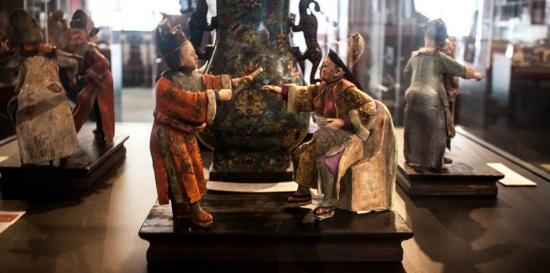
Figurines Pintados Chinos en Accion
El edificio que aloja el Museo Histórico Chino tiene una destacada historia relacionada con el desarrollo de relaciones entre los Chinos de Stingaree y la comunidad en su conjunto. En 1885 un joven Chino llamado Lee Hong se asocio con la Asociacion de American Home Missionary para establecer la escuela Chinese Mission School donde los asistentes podían tomar clases de religión y Ingles. Situado en la esquina de 13 y F, la Mission School quedaba bastante distante de Stingaree, así que en 1901 la escuela se mudó a la calle 1 entre Market y G. Al momento de la mudanza, eran dormitorios para chinos (la mayoría hombres Chinos). Después, la Chinese Mission School abrió una escuela de Domingo para niños chinos- la primera de este tipo en California del Sur. La escuela también hacia papel de lugar de encuentro que proveía un sentido de seguridad y comunidad durante un periodo difícil de discriminación e hostilidad hacia los Chinos en San Diego. La escuela también creó un contexto para relaciones constructivas sin precedentes entre los Chinos y los Caucásicos que apoyaban los esfuerzos hacia el bienestar social.
En 1927 la Mission School fue destruida y un nuevo dormitorio y edificio donde esta ahora la Chinese Historical Museum fue construida. El edificio fue modelado sobre Spanish Missions del siglo 18 y 19. En 1958, en parte debido al largo éxodo Chino del Stingaree, el edificio Mission fue vendido a una imprenta. Mas recién, a mediados de 1980 los planes para construir edificios de apartamentos de lujo en su lugar marcaron los el viejo edificio de la misión para demolición. Lideres de la comunidad China se preocuparon porque querían preservar el edifico y su historia única, así que empezaron una campaña de 2 años para poner el edificio en el Registro Histórico para evitar su demolición. Para hacer lugar para la renovación del centro de la ciudad, en 1995 el edificio entero fue movido a donde esta ahora sobre 3rd Avenue. Menos de un año mas tarde, renació con el nombre Chinese Historical Museum, honorando y preservando la historia de la comunidad China que existió ahí.
En 2004, el museo compró un edificio en frente en la calle J Street donde crearon una galería altamente moderna que llaman el Sun Yat Sen Memorial Extension, donde además de la galería para muestras en rotación, existe también una biblioteca y un auditorio. Presentemente la exhibición es "Ah Quin:Vida, liderato y legado," la cual cuenta en fotos, notas en su diario, documentos y artefactos la vida ilustre de Tom Chong-kwan, alias "Ah Quin," el susodicho "Alcalde" de Chinatown en su día. La galería esta actualemente en la misma cuadra donde Ah Quin y su gran familia de 12 niños vivían en una casa formidable de dos pisos. Verá exactamente donde está la casa si se une al paseo del barrio del Museo!
El Chinese Historical Museum y la historia que abarca es uno de los tesoros menospreciados de San Diego. Hoy la zona no se parece al animado y colorido vecindario que fue una vez. Los negocios y residentes Chinos ya no viven en el vijo Stingaree, pero su historia permanece en el Chinese History Museum. Tomando en cuenta que la entrada cuesta solo $2 y que el paseo también es solo $2, es una manera maravillosamente de pasar una tarde agradable aprendiendo la historia local de San Diego y el papel de los inmigrantes Chinos en ella. A través de los años hemos recomendado a muchos de visitar el museo y el paseo y todos regresan impresionados y interesados. Ahora le toca a Usted.
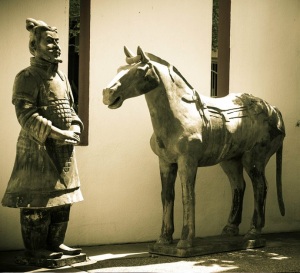
Para una incursión mas detallada de la fascinante historia del Chinatown de San Diego revise los excelentes artículos publicados en el Journal of San Diego History, incluyendo:
San Diego's Chinese Mission and Shady Ladies in the "Stingaree District" (When the Red Lights went out in San Diego) (La Misión de San Diego y Señoras Dudosas del Distrito Stingaree '" Cuando las Luces Se Apagaron en San Diego) ambos de Elizabeth MacPhail
Reclamation and Preservation (Reclamación y Preservación) de By Leland Saito, Ph.D.
By Jaylynn Ramirez, Austin Song, Kellie Carstensen and Tom Johnston-O'Neill
Photos by Jaylynn Ramirez

- Details
- Hits: 2990
El Centro de la Música Mundial es una organización sin fines de lucro cuya única misión es la de fomentar la conciencia y la comprensión de las diversas artes y culturas en el mundo a través de actuaciones públicas y la enseñanza. Su objetivo principal es el de llamar la atención pública hacia la diversidad de las artes escénicas del mundo y sus tradiciones: Asia, África, Europa, América Latina y Estados Unidos de Norteamérica. |
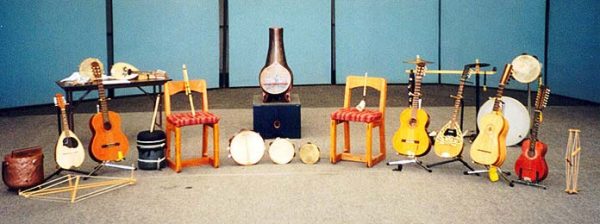
Instruments for the Musicàntica group
El Centro para la Músicas Mundial es una organización sin fines de lucro cuya única misión es la de fomentar la conciencia y comprensión de las diversas artes y culturas que realizan en el mundo a través de actuaciones públicas y la enseñanza. Su objetivo principal es llamar la atención pública sobre la diversidad y tradiciones de las artes escénicas del mundo: Asia, África, Europa, América Latina y Estados Unidos. Por lo tanto, la filosofía del Centro es promover el entendimiento intercultural mediante la apreciación de las artes escénicas, así como de su importancia para las diversas tradiciones del mundo. Más específicamente, los cuatro objetivos principales del Centro para la Músicas Mundial son: (1) Estimular el reconocimiento público de las diversas expresiones culturales del mundo a través de las artes escénicas. (2) Proporcionar oportunidades que promuevan la comprensión de las diversas culturas del mundo a través de artes escénicas tradiciones de la música y la danza. (3) Promover los diversos activos multiculturales de la región de San Diego. (4) Fomentar la apreciación y la comprensión de las diversas tradiciones culturales y artísticas de la población mundial, a través de experiencias directas en diferentes países y culturas alrededor del mundo.
La misión, el propósito , la filosofía y los objetivos del Centro para la Músicas Mundial, se implementan por medio de cuatro programas de calidad internacional en San Diego: Programa de Serie de Conciertos con más de 20 presentaciones anuales, Música Mundial en Programas Escolares ( con 14 artistas- profesores nativos y nativos entrenados en residencia), programa de eventos especiales (por ejemplo , festivales , conciertos en casa , talleres, etc.), y Programa Cultural de Jiras en el Extranjero (con música y talleres de danza, artes escénicas, excursiones en Bali , India , China , Estambul, Perú , México y Ghana) .
El Centro para la Músicas Mundial fue creado por Samuel H. Scripps y su esposa Luisa en 1963 como la Sociedad Americana de Artes de Oriente, con la misión inicial de introducir al público estadounidense a las artes escénicas de Asia. La sociedad pronto amplió su alcance y designó al Dr. Robert E. Brown como director ejecutivo en 1973, cuando el programa renació como el Centro para la Música Mundial en Berkeley, California. Actividades de la época incluyeron 40 artistas residentes de Asia y África, enseñanza durante todo el año en el centro de Berkeley, y música de Indonesia con éxito en el programa de Escuelas (parcialmente financiado por el Fondo Nacional de las Artes) en Berkeley, San José, y Oakland. En su apogeo, el Centro administraba sus actividades con un presupuesto anual de más de $500,000.
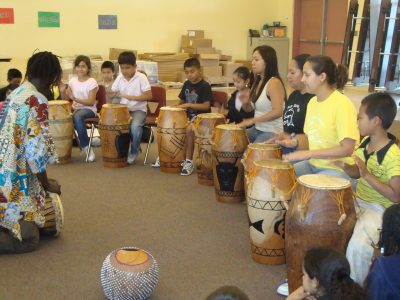
En 1979 el Centro se trasladó permanentemente a San Diego, donde continuó fomentando la apreciación musical mundial y el rendimiento medio de la asociación con universidades y colegios locales, ampliando así su alcance a través de proyectos desarrollados con las comunidades locales de Hmong, filipinas, India y chicanas. En base al éxito con los programas escolares, el Centro para la Músicas Mundial ha seguido patrocinando artistas en apoyo de la música del mundo para los niños a través del patrocinio de artistas, incluyendo un extenso programa en escuelas del proyecto Música Mundial que inició en San Diego en el año 1999. En la Escuela Museo, por ejemplo, los alumnos estudian música gamelan indonesia, danza étnica, construcción de instrumentos, y la flauta shakuhachi japonesa a través de un riguroso plan de estudios, a cargo de cuatro artistas en residencia. Durante el año escolar 2009-2010, el Centro educa a 2,210 estudiantes de 9 escuelas con clases semanales a largo plazo (13-28 semanas) y proporciona servicios adicionales a 3,240 estudiantes en estas mismas escuelas con actuaciones de montaje de toda la escuela de artistas- docentes del Centro, alcanzando un total de 5.450 estudiantes. Durante el año 2010 el Centro también siguió coordinando con el Departamento de Artes Visuales y Escénicas del Distrito Escolar Unificado de San Diego para facilitar la aplicación del Centro de Músicas para el Mundo en las oportunidades de Escuelas. Además, cuatro programas de la comunidad sirven 105 miembros de la comunidad con clases semanales a largo plazo
(26-45 semanas), mientras que unos 2,600 nuevos miembros de la comunidad asistieron a espectáculos públicos de estos grupos. Durante el semestre de otoño del 2010, el Centro para la Músicas Mundial y la Escuela de Música y Danza de la Universidad Estatal de San Diego crearon una nueva sociedad que se compromete a garantizar el vigor del Programa Mundial de Música en SDSU, este es un distinguido programa que se estableció con la asistencia del Centro de Músicas para el Mundo en 1980. Cuadro del Centro está conformado por 14 artistas- profesores quienes actualmente imparten clases semanales de música y baile a miles de niños de las escuelas públicas de San Diego: artes escénicas tradicionales de la India, Java, Bali, Irán, México, Ghana, Zimbabwe, y Europa.
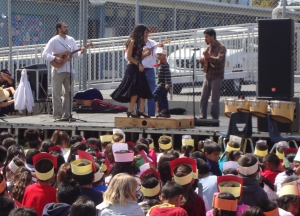
Además de sus programas para la juventud en San Diego, el Centro para la Músicas Mundial llega a amplias franjas de la población en los Estados Unidos a través de la organización y presentación de los conciertos públicos de gran escala en el sur de California, así como giras a nivel nacional para los artistas que patrocina. Para los profesores de música del mundo, el Centro ha creado la serie anual de Conciertos de Música Mundial en San Diego (San Diego World Music Concert Series anual), con un mínimo de 20 conciertos al año, esto, como una introducción más afable para los estudiantes, ya que la admisión es completamente gratuita o el costo de admisión general es reducido sustancialmente. Sólo en 2010, el Centro produjo más de 30 conciertos públicos de música y danza tradicionales de Irán, India, Ghana, Zimbabwe, Europa, Cuba, Brasil, Bolivia, México, Filipinas, Senegal, China, Bali y Java. Algunos de las localidades en San Diego, donde se llevaron a cabo dicha serie de conciertos son Seaport Village, el Instituto de Neurociencias, universidades locales y colegios de la comunidad, escuelas públicas de San Diego, y casas privadas.
Además de su extraordinaria misión, propósito, filosofía y objetivos, quizás el mejor haber del Centro para la Música Mundial, es su hermoso campus de artes escénicas el cual cuenta con más de dos acres en las colinas del centro de Bali; El cual fue construido entre 1987-2005 por el etnomusicólogo estadounidense, distinguido profesor, y ex presidente del Centro para la Música Mundial, el Dr. Robert E. Brown.
Con 20 amplios edificios de estilo balinés, el campus tiene capacidad para 30 huéspedes estudiantiles y ha sido durante muchos años la casa del taller de verano del Centro para la Música Mundial en Bali con duración de dos semanas (con profesores y estudiantes de prestigiosas universidades estadounidenses como la Universidad Metodista del Sur, Universidad de Stanford, Universidad del Estado en San Diego, Universidad de Illinois, CalArts, Universidad de Washington, así como de universidades de Singapur e Inglaterra).
Entre 1987 y 2010, cientos de profesores universitarios y sus estudiantes han asistido a la realización de talleres de arte en el Centro del campus en las colinas. De hecho, se llevaron a cabo tres talleres con una duración de dos semanas en el verano del 2010 en el campus en Payangan, Bali: SMU Drumming en Bali (1 de junio 16 de junio), Indonesia Encuentros 2010 (16 de julio 04 de junio), y mezclas
(07 29 hasta 08 20). El enfoque del taller SMU (Universidad Metodista del Sur, América) fue en tambores de West Java (Sonda), Bali, Sumatra, India y el Medio Oriente. El enfoque del taller Encuentros de Indonesia fueron las artes escénicas de Sunda, Java y Bali, que incluyen música, danza y teatro de títeres, el taller concluyó con un festival de tres días Payangan en música de Java y Bali. El taller de MIXES presento un " Proyecto de colaboración " entre profesores y alumnos de la Yong Siew Toh Conservatorio de Musica de la Universidad Nacional de Singapur, la Escuela de Música y Drama Guildhall de Londres, y el cuadro del Centro nativo Sundanes y maestros artistas-profesores Balineses. El enfoque de las MIXES fue en música tradicional de West Java (Sonda) y Bali, en particular una variedad de conjuntos muy interesantes como gamelan jegog y gamelan selunding.
Cinco talleres similares se programaron para el verano de 2011, y la Junta Directiva de la organización espera que su hermoso refugio en la montaña de Bali seguirá inspirando duraderas y valiosas experiencias interculturales para los participantes del taller como el Centro de Músicas del Mundo continúa fomentando la conciencia y la comprensión de las diversas artes escénicas del mundo y las culturas a través de actuaciones públicas y la enseñanza.
El Centro de Música del Mundo cuenta con el apoyo from the National Endowment for the Arts, the California Arts Council, the County of San Diego, and the City of San Diego Commission for Arts and Culture. Recent Center projects have also been supported by the Asian Cultural Council, and The Parker Foundation.
Para obtener más información sobre el Centro de Músicas del mundo, por favor visite: www.centerforworldmusic.org
Dr.Lewis Peterman, presidente del Center For World Music
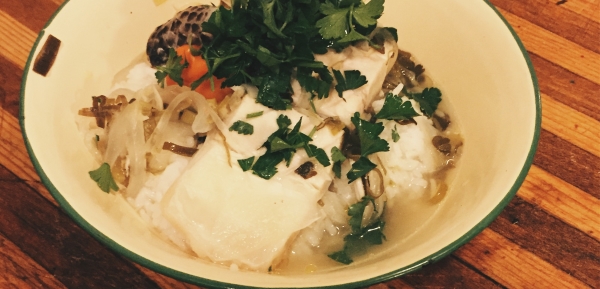
The cuisine of Martinique, an island in the Caribbean Sea, combines influences from a disparate variety of cultures and traditions. Much of Caribbean culture is known as "Creole" a term that originally referred to people of European descent who were born in the Americas. However its meaning broadened over time into an umbrella term for a cultures that were forged out a mixture of European, African and indigenous influences. The term emblematic of the food, language and people of the Caribbean islands, particularly the West Indies.
The sea influences the cuisine of these islands. The bountiful seafood coupled with produce that is now grown on these tropical islands are hallmarks of the diet in the Caribbean. Plantains, fresh herbs, fruit and various citrus items make constant appearances in the food from Jamaica in the North to Trinidad and Tobago in the South.
Martiniquais cuisine showcases the influence of French, African, Carib Amerindian and South Asian styles throughout its cooking methods, ingredients and flavor combinations. For example, dishes spiced with "Colombo" powder (also referred to simply as "Colombo") will have generous amounts of dried spices like mustard seed, turmeric, coriander, garlic and red chilies, an homage to the masalas of the Indian subcontinent. Another nod to the diverse heritage of Martiniquais cuisine is the acra, a fritter typically made from salt cod. This fritters origins can be traced to akara, a black-eyed pea fritter ubiquitous throughout West Africa, and in bacalahu, a preserved cod popular in seafaring European nations. Additional ingredients such as yams, peas and leafy greens also link West Africa with the Caribbean island cuisine.
The dish listed below, Sea Bass blaff, showcases a bit of each cultural influence. Its name comes from the noise a piece of fish makes when it is dropped into a pot of water.
Marinade Ingredients:
- 2 pounds red snapper, bream, or bass
- 1 Scotch Bonnet pepper
- 4 cloves of garlic
- 1 medium yellow onion, chopped
- 2 tablespoons white wine vinegar
- 4 limes, juiced
- Salt and black pepper
Blaff Ingredieents:
- 2 cloves garlic, minced
- 6 scallions, finely chopped
- 1 large white onion, julienned (thin strips cut from end to end from a halved onion)
- 1 bay leaf
- 3 sprigs of fresh thyme, leaves removed and roughly chopped
- 2 whole cloves
- 5 sprigs flat leaf (Italian) parsley, finely chopped
- 1 Scotch Bonnet pepper
- 4 limes, juiced
- Salt and pepper to taste
Preparation:
- Place the pieces of fish into a large nonreactive bowl (stainless steel, ceramic, glass or enamal).
- Add the marinade ingredients with enough water to cover the fish. Allow the fish to marinate eight hours or overnight.
- Pour 1 cup water into a 2-quart saucepan and add in half of the scallions, garlic, onion, thyme and parsley, along with the bay leaf, Scotch Bonnet pepper and cloves.
- Season the mixture to taste with salt and pepper.
- Heat to a gentle simmer over medium high heat.
- Once simmering, add the fish and lower heat to maintain a simmer for 5-7 minutes, until the fish is cooked through.
- Remove the mixture from the heat and add in the lime juice and garnish with the remaining herbs and aromatics.
- Stir the mixture gently, making sure not to burst the pepper, and serve with a side of rice or cooked yams.
Recipe and Photo by Liam Fox
- Details
- Hits: 6205
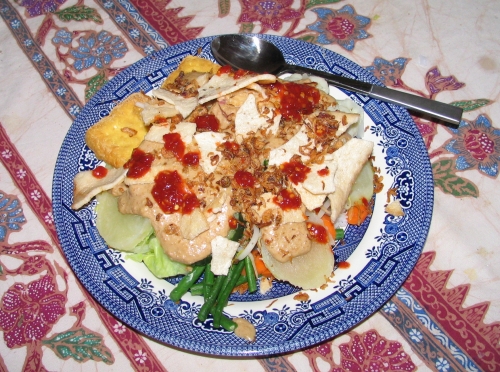
Indonesians eat a lot of their foods with their hands, but not usually Gado-Gado (I'm sure there are exceptions). You might be tempted to break out a fork for the task but a spoon the size of a serving spoon is more common and authentic.
Before eating Indonesians often say Makanlah (Ma Con Lah) which means "Let's Eat!" This exhortation is often accompanied by a symbolic motion by the speakers hand "offering" the food to others. This is particularly done when eating in public, the offer is extended to everyone nearby the eater, not just the folks at the table.
When eating in an informal Indonesian restaurant it is not uncommon for strangers to sit down to eat with you if your table has any empty chairs. It's a great way to meet new people!
Gado-gado an Indonesian Culinary Adventure
Gado-gado is a popular Indonesian dish that hails from the island of Java but is found throughout much of Indonesia and Malaysia. Like many Indonesian meals -- and gado gado is a complete meal -- it creates a melody of tastes; at once spicy hot, sour, sweet and very slightly salty. The ingredients vary from place to place and from cook to cook. Typically it is served at room temperature but it is best if everything is freshly prepared and still slightly warm but not hot. The word Gado-Gado simply means "mixed-up."
If you are a vegetarian traveling to Indonesia, it will be a culinary refuge. Done right, gado-gado is a multi-layered delight. The lowest layer consists of freshly cooked white rice. On top of this are cooked vegetables, hard boiled eggs and fried tofu. Toping this is a layer of spicy peanut sauce. The top layer consists of a prepared tomato and chili sauce along with fried onions and shrimp crackers.. We give a recipe for making "home-made" peanut sauce but dry pre-prepared mixtures can be purchased and they are gaining in popularity. All of the ingredients mentioned in this article can be purchased in the 99 Ranch Market on Clairmont Mesa Blvd.
Gado-gado Peanut Sauce (Bumbu Kacang )
The peanut sauce for Gado-gado is a bit difficult to make here in the United States due to unavailability of certain spices and flavorings in American stores, even in Asian grocery stores. You may be tempted to purchase ready-made peanut sauce, often called "Thai peanut sauce" found in many American and Asian grocery stores but we have not found any that come close to the Indonesian style.
There is, however, a very reasonable and tasty alternative. At 99 Ranch Market on Clairemont Mesa Blvd. you can purchase little ready-made packages of ground peanuts and spices that will do just fine. The are called Bumbu Gado-gado or Bumbu Pecel This peanut sauce can also used for Javanese-style "sate" skewers of chicken and sometimes beef or goat that are marinated in a sweet soy sauce (kecap manis.
You can follow the package instructions which suggest just adding water. For a tastier and creamier sauce, substitute coconut milk for the water and add a tablespoon or two of fresh lime juice at the very end. If you desire a more spicy-hot sauce, add a tablespoon or two of "Sambal Olek" a hot chili-tomato-garlic sauce which can now be found in nearly all San Diego grocery stores in the Asian food section.
If you really must make your peanut sauce from scratch here is a recipe.
Peanut Sauce Ingredients
- 1/2 tablespoon of peanut oil
- 1 cup of natural peanut butter (not chunky)
- 2 cloves of finely chopped garlic
- 1/2 teaspoon of shrimp paste (terasi or blacan. but 1 Tbsp of fish sauce can be used instead)
- 1 cup of coconut milk (water can be substituted but you will lose a bit of flavor and delectable creaminess)
- 2 tablespoons minced shallots
- 1 tablespoon of soy sauce
- 1 cup of water (that would be 2 cups if you are not using the coconut milk. Amusingly the Indonesian word for water is air, roughly pronounced "ah-ear")
- 3 tablespoons of palm sugar (aka gula jawa, gula merah or jaggary) brown sugar can be substituted).
- 1 teaspoon of sambal olek
- 2 tablespoon tamarind juice (lemon or lime juice are fine too)
- 1 tablespoon ground Kencur root (aka "lesser galangal")
- 3 citrus leaves (kaffir lime or jeruk perut)
Note: It may be easier to use sweet soy sauce "Kecup Manis than the soy sauce and palm sugar found in this recipe. Use this to sweeten the sauce to taste, it should be fairly sweet but not overbearingly.
For a glossary of popular Indonesian ingredients see: http://www.melroseflowers.com/mkic/ingredients.html
Peanut Sauce Preparation:
- Heat the oil in a frying pan over a medium heat.
- Add the garlic and shrimp paste and cook for 1 minute stirring constantly to dissolve the shrimp paste.
- Add all of the remaining ingredients except the tamarind juice (or lemon or lime juice).
- Bring to a boil then reduce heat to low and simmer uncovered for 10 to 15 minutes. Be sure to stir frequently to prevent the sauce from burning.
- When sauce is creamy add in the tamarind, lemon or lime juice.
If the sauce gets too thick just add more water. It should be rather thick but pour easily.
Essential Ingredients! Bumbu Pecel, Krupuk Udang and Sambal Olek
Main Ingredients:
You can use practically any kind of vegetable you can think of, below are ones that might be more popular in Indonesia. You can use more or less of the vegetable according to your liking, we mention 1 cup amounts but this is really up to you and the desires of your guests. Do not overcook the vegetables; they should be just past the point of being crunchy. All the vegetables can be cooked in salted water.
- 3-4 hard boiled eggs, peeled and sliced (A trick for cooking hard-boiled eggs is to bring them to a boil, cover the pot, turn off the heat and wait 20 minutes)
- 1 cup cabbage, cut into medium size bits
- 1 cup long beans cut into 4inch lengths (these are called kacang panjang in Indonesia, also known as "Chinese long beans." Trim the ends and cut into 4-5 inch lengths. It is perfectly ok to substitute whole green beans instead).
- 1 cup carrots, sliced
- 1 cup cauliflower, cut into smallish bud sized pieces
- 1 cup mung bean sprouts
- 1 medium sized boiled, peeled and sliced potato
Preparation:
Attention to cooking times is essential for an outstanding result. At sea level we suggest:
- Boil the potatoes until they are done but not mushy. You can boil the whole, pre-sliced or however you like.
- 3-4 minutes for the carrots
- 2-3 minutes for everything else
- Cucumbers. Use raw. Score the cucumber lengthwise with a fork before slices, we swear it improves their taste (and, of course they look nicer).
- Tomatoes: Use raw, cut into small wedges.
Frying the Tofu
This is a bit more tricky that it might seem as tofu has so much water in it making it difficult to brown. Chinese and Japanese fried tofu is covered with flour or cornstarch, but this is not very Indonesian tasting. Start out by slicing the tofu into flat strips. It is important that you pat dry the tofu slices with paper towels or a cloth until it doesn't wet the towel anymore. The cooking oil should be around 300 degrees (hot but not really really hot) or so. You can pan fry or deep fry the tofu until it is golden brown. We've heard that salting the tofu with coarse salt and letting it stand for 5 minutes and then patting it dry helps. You can also fry tempe (fermented soy bean cake) in a similar manner.
The Magic of Krupuk
Krupuk are Indonesian version of chips or crackers and they come in a wide variety of types and ingredients. The base ingredient is tapioca but krupuk get their flavor from the added ingredients. In Java they now have "krupuk eating contests" perhaps a bit (not much) more healthy than American pie or hot-dog eating contests. The most popular variety is "krupuk udang," shrimp flavored and it is the variety that is usually used with gado-gado. Krupuk are magical. They start out as flat hard slices and when heated they expand dramatically into llarge light-as-a-feather crunchy delight. There are two ways to prepare krupuk, the typical Indonesian way and the tricky but convenient and more healthy way (but a wee bit less tasty).
Usual Indonesian method:
- In a wok or 5- to 6-quart pan, pour peanut oil to a depth of about 1 1/2 inches. Set pan over high heat and bring oil to 350 degrees. If you are unfamiliar with deep frying, try using a candy thermometer.
- Drop 3 to 5 krupuk or 1 larger cracker into oil and, with a slotted spoon, turn to cook other sides; they puff almost immediatelyRemove from oil and drain in paper towel-lined pans.
- Repeat step to cook remaining krupuk.
The Convenient method:
Krupuk can be cooked in a microwave which lessens their oil content. It is a bit tricky, however, as it is easy to burn them (which is awful) or undercook them (awful too) or do both at the same time (horrible). Each microwave oven is different so a bit of experimentation is required. When we use this method we set our microwave to half power and heat them in a large microwave-safe bowl for a minute. But it is really important to keep a watchful eye out on matters to prevent a culinary disaster.
Presentation
Array the vegetables, tofu and eggs on a platter. Put the rice, sambal olek (chili sauce), fried onions and shrimp crackers in their own separate serving dishes.
Assembling a plate: The art of eating gado-gado. May we suggest:
- laydown a layer of rice (as much or little as you like)
- Artistically festoon the rice with the vegetables, tofu and eggs.
- Slather the peanut sauce over the whole creation
- Sprinkle fried onions over the top
- Crumble a few Shrimp Crackers over everything
- Sprinkle a bit of Sambal Olek chili sauce on (careful!)
Selamat Makan! (Happy Eating!)
Recipe by T. Johnston-O'Neill
Photos by Shari K. Johnston-O'Neill
- Details
- Hits: 5106
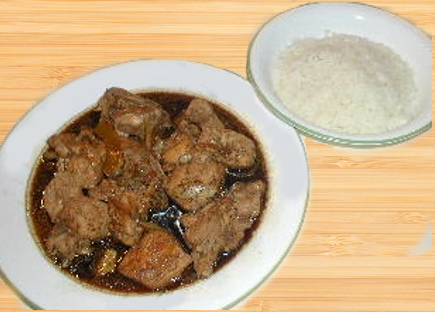
The most famous of all Philippine dishes is adobo. Delicious and easy to make. Here is a recipe for chicken adobo and a recipe for the sweet snack known as turon.
Anyone who visits a Filipino home is offered food by the question, Kumain ka na?, which means "Have you eaten?" It is a polite gesture to say that you haven't eaten even though you may already have. During the preparation of meals, it is also considered polite to ask the host if he or she needs assistance. Most likely, however such an offer to help will be politely refused by the host.
Much of the Philippine population are Catholics or Christians. This is particular true of the lowland ares, in the cities and in the northern part of the country. Christians in the Philippines typically pray before meals to express their thanks and ask for blessings. Eating is normally a social affair enjoyed with friends and family. Sharing food is very common amoung Filipinos who eat together. Filipinos often eat with their hands, which is called kamayan. However, forks and spoons are increasingly popular and preferred by some eaters. Filipino dishes are usually served buffet style with all the dishes presented at the same time. Burping after a meal is not considered rude, instead it is interpreted as an expression of satisfaction. When a party or gathering comes to an end it is common for guests to be offered food to thank them for coming to the festivities. If you attend a a Filipino gathering most likely will leave with plates full of wonderful Filipino dishes
Like other countries, the Philippines have several dishes that are considered to be representative of the country's cuisine. Favorite Filipino dishes include adobo, kare-kare, sinigang, and lumpia. There are many Filipino stores that serve these and many other wonderful Filipino foods in San Diego. Popular Filipino restaurants are Point-Point, Conchings, and Tita's Kitchenette, which are all located in National City.
Below are recipes for two well-known easy to prepare Filipino Dishes. So, as we say in Tagalog, Filipino national language, Pagsaluhan natin or let's dig in!
Adobo is one of the many national dishes in the Philippines. It is a Spanish-influenced Filipino dish that is believed to have originated from Pampanga, a northern part of the Philippines. Adobo is made usually from chicken or pork. The meat is first marinated with a variety of seasonings and flavorings including soy sauce, crushed garlic, and vinegar and then slow-cooked. Adobo has many ingredient variations and methods of preparation. Other countries, including Mexico and the Caribbean, also produce their own tasty versions of adobo. The blending of sweet, sour, and spicy flavors will leave your taste buds delighted. Adobo is a simple to prepare meal that does not take much time or many ingredients.
Chicken Adobo Ingredients:
- 1 whole chicken cut into pieces as in photo
- ¼ cup vinegar
- ½ cup soy sauce
- 5 crushed cloves of garlic
- ¾ cup water
- 1 bay leaf
- 1 teaspoon ground pepper
Chicken Adobo Preparation:
- Cut a whole chicken into small bite-size pieces.
- Place the chicken in a 2 quart pot.
- Add vinegar, soy sauce, crushed garlic, bay leaf, pepper, and water to the pot.
- Bring the liquid to a boil while stirring. Lower the heat to a gentle boil.
- Cover the pot and simmer for about 25 to 30 minutes. Stir occasionally.
Then, yan, tapos na (It's done)! It is simple as that.
Adobo is usually served with white rice so it is be a great idea to start the rice cooking while you are letting the chicken simmer.
Turon
Turon is a wonderful Filipino tasty sweet snack to enjoy anytime of the day. It is a fried combination of banana and jackfruit laced with brown sugar. Turon is often made for Filipino get togethers and parties.
Turon Ingredients:
- 3 tablespoons of brown sugar
- 1 package of lumpia wrapper
- Canaola oil or vegetable oil
- Bananas (saba are the best)
- Ripe Jackfruit (optional, it is very sweet)
Turon Preparation:
Saba bananas are usually used for Turon. You can find saba bananas in most Asian grocery stores. For this recipe, we used regular bananas.
- Begin by cutting the bananas in half.
- Then, cut the half of both bananas length-wise so that you have four pieces of banana.
- Roll the pieces of banana in the brown sugar until they are completely coated.
- Wrap each sugar-coated banana piece in its own separate lumpia wrapping paper. (Don't worry, lumpia wrappers usually come with instructions)
- Pour an inch of oil into a frying pan and turn the heat to medium (350 degrees).
- Carefully place the wrapped turons into the frying pan using a pair of tongs.
- Fry the turons until the bottom of the turon turns golden brown then flip the turon over and cook the other side.
- After the turons turn a wonderful golden brown, remove and let them cool a bit. It doesn't take long for lumpia wrappers to brown so monitor the frying closely.
Recipes and Photos by Nuelma Patio
- Details
- Hits: 20176
Joomla!
Extensions
The Joomla! content management system lets you create webpages of various types using extensions. There are 5 basic types of extensions: components, modules, templates, languages, and plugins. Your website includes the extensions you need to create a basic website in English, but thousands of additional extensions of all types are available. The Joomla! Extensions Directory is the largest directory of Joomla extensions.
Components
Components are larger extensions that produce the major content for your site. Each component has one or more "views" that control how content is displayed. In the Joomla administrator there are additional extensions such as Menus, Redirection, and the extension managers.
Modules
Modules are small blocks of content that can be displayed in positions on a web page. The menus on this site are displayed in modules. The core of Joomla! includes 24 separate modules ranging from login to search to random images. Each module has a name that starts mod_ but when it displays it has a title. In the descriptions in this section, the titles are the same as the names.
Content Modules
Content modules display article and other information from the content component.
User Modules
User modules interact with the user system, allowing users to login, show who is logged-in, and showing the most recently registered users.
Display Modules
These modules display information from components other than content and user. These include weblinks, news feeds and the media manager.
Utility Modules
Utility modules provide useful functionality such as search, syndication and statistics.
Navigation Modules
Navigation modules help your visitors move through your site and find what they need.
Menus provide your site with structure and help your visitors navigate your site. Although they are all based on the same menu module, the variety of ways menus are used in the sample data show how flexible this module is.
A menu can range from extremely simple (for example the top menu or the menu for the Australian Parks sample site) to extremely complex (for example the About Joomla! menu with its many levels). They can also be used for other types of presentation such as the site map linked from the "This Site" menu.
Breadcrumbs provide users with information about where they are in a site.
Page 20 of 33

Follow Us!
 |
 |
 |
 |
 |
 |
Book of the Month

Ali and Nino: A Love Story
Recipe of the Month

Music of the Month

Mahagita: Harp & Vocal Music From Burma
Organizations We Like