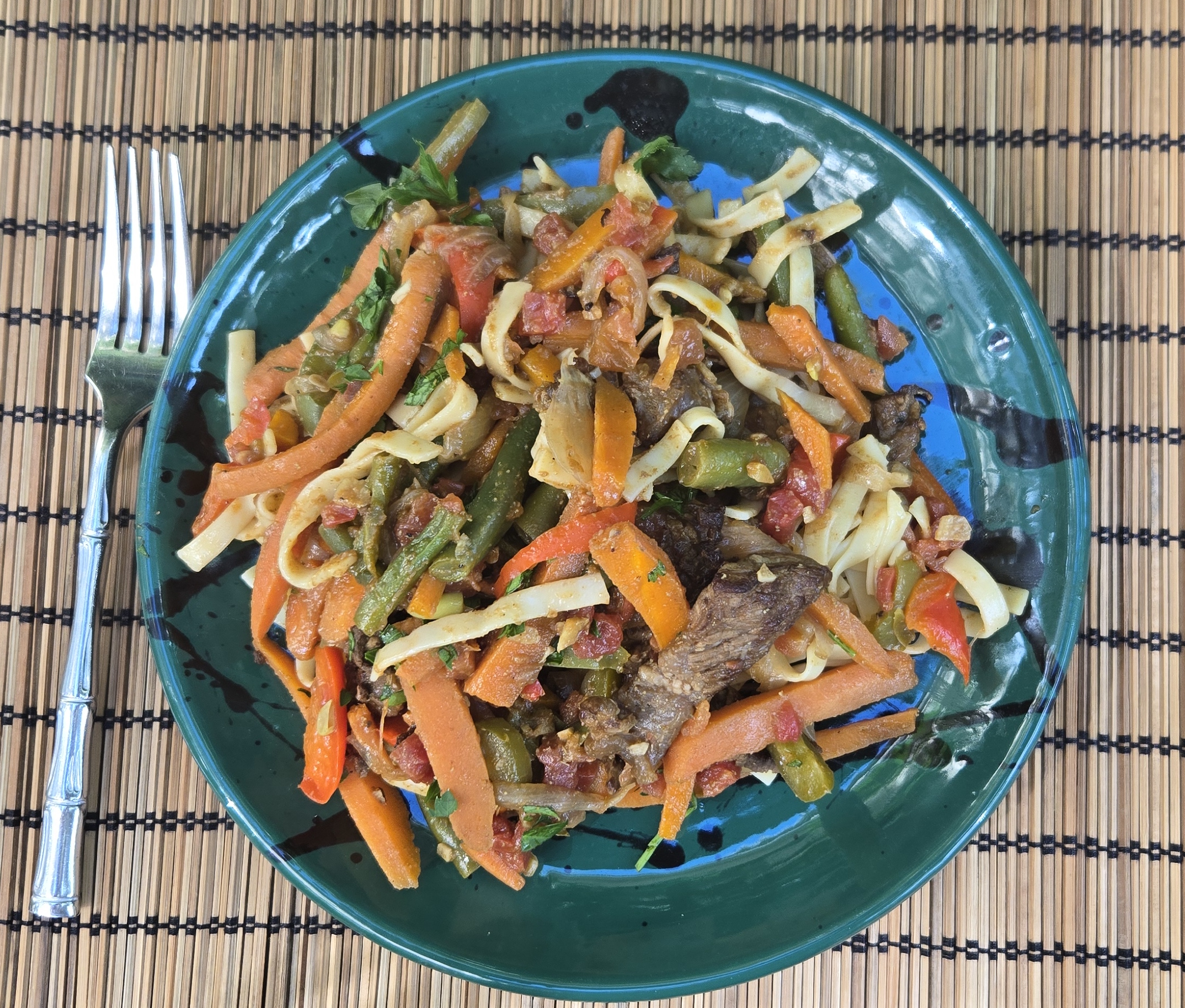
This month's recipe is for Caldo Verde. This potato-based green soup, vies with Bacalhau (salted cod) for the title of Portugal’s national dish. Originating in the northern Minho region but enjoyed throughout the country, it is simple to prepare and made from readily available ingredients. Broa, a traditional corn-and-rye bread, is the customary accompaniment to this classic Portuguese comfort food.

Northern Portugal is considered the birthplace of Caldo Verde, particularly the north western region known as Minho. The Minho region of northern Portugal is considered one of the historic heartlands of Portuguese culture and identity. Before the Roman conquest, the region was inhabited by Celtic and Celtiberian peoples associated with the Castro culture, known for their fortified hilltop settlements and circular stone houses. The Romans later incorporated the area into the province of Gallaecia, leaving a lasting influence on language, roads, agriculture, and urban development. During the Middle Ages, Minho played a central role in the birth of Portugal itself. The city of Guimarães is traditionally regarded as the birthplace of the Portuguese nation and is closely associated with Portugal’s first king, Afonso I of Portugal, who established the independent Kingdom of Portugal in the 12th century. The region developed a strong agricultural tradition supported by its rainy climate and fertile lands, while its towns and monasteries became important centers of religion, trade, and culture. Today, Minho remains closely associated with traditional Portuguese music, folk festivals, vinho verde wine, and regional cuisine, including dishes such as caldo verde.
Caldo Verde (lit. "green broth" but much more hearty than mere broth) is a savory and satisfying soup that is not only essential for special occasions, but it is also an every-day dish prepared in homes, restaurants, and traditional tabernas. Tabernas traditionally were inexpensive local drinking spots offering wine and plates of sausages, salt cod fritters, and sardines along with
In Portugal, the green used for the soup is called couve galega (Galician cabbage, Portuguese Kale, Portuguese cabbage, walking-stick kale). It is a loose-leafed variety of brassica closely related to collard greens and kale, and is especially associated with northern Portugal and neighboring Galicia. What makes the plant somewhat unusual (for a cabbage) is the way it grows. Unlike typical cabbages, which form compact heads near the ground, couve galega grows on a tall, upright stalk that can become almost tree-like, sometimes reaching over six feet in height, which is why it is sometimes referred to as "walking-stick kale". As the plant matures, the lower leaves are harvested continuously while new leaves keep forming at the top. This gives the plant the appearance of a small palm or miniature tree with a tuft of leaves at the crown.
Traditionally, the leaves are sliced into extraordinarily thin ribbons — finer than is common with most soups — which is one of the defining characteristics of authentic Caldo Verde. The texture is meant to be delicate rather than coarse.
As couve galega is not readily available in the US, flat-leaf kale or collard greens can be substituted, but couve galega has thinner, softer, and slightly less bitter. We used collard greens when we prepared the soup.
Another choice to make is the potatoes. As a recent trip to the farmers’ market in Barcelos showed us, there are quite a number of potato varieties in Portugal to choose from. Our recommendation for this dish is either Russet or Yukon Gold potatoes.
The mild, creamy taste and texture of caldo verde is nicely contrasted by the addition of slices of Portuguese sausage. While, once again, there are a variety of sausages to choose from in Portugal, the two most common types are Portuguese chouriço and Portuguese linguiça. Chouriço is the preferred sausage for caldo verde; it is firmer and more highly spiced than linguiça. However, it is harder to find in the U.S., and we used Portuguese linguiça, which we found at Whole Foods. Spanish chouriço is rather different than the Portuguese variety, it drier, firmer, and uses much more paprika. While Mexican chorizo sausages do exist, the common loose version is nothing like Spanish or Portuguese chorizo.
Grilled sausages are a common offering in Portuguese tabernas, typically served sliced and eaten with toothpicks or skewers. At one riverside eatery in Porto, we were served a plate of sausages along with an assador de chouriço (“chouriço roaster”), which allowed us to roast the pieces of sausage right at our table.
Broa is an easy-to-prepare corn, rye and wheat bread that is commonly served with caldo verde. It is a rustic, no-knead bread that even the most novice baker can manage.
Cook's Notes:
The easiest way to slice collard greens is to cut away the central rib of each leaf, resulting in two long pieces. Roll each piece up lengthwise (starting from the end, not the side), then slice the roll very thinly.
Cornmeal is much easier to find than corn flour. Use either fine or medium cornmeal if you can't obtain corn flour. Don't use cornstarch; it won't work at all.
Broa is rather dense because no sugar is added to encourage additional yeast growth. Instead, the yeast reacts to the natural sugars in the cornmeal, so the bread rises only slightly.
When making broa, begin by bringing the water to a boil and "shocking" the corn flour or cornmeal with the hot water.
Caldo Verde Ingredients
- 2 tablespoons olive oil
- 1 medium onion, finely chopped
- 2 cloves garlic, minced
- 1 1/2 pounds potatoes, peeled and sliced
- 6 cups chicken broth, vegetable broth, or water
- Salt and black pepper, to taste
- 4 cups finely shredded flat-leaf kale, collards, or couve galega
- 6 to 8 ounces Portuguese chouriço or linguiça, sliced into rounds
- Extra olive oil, for serving
Preparation
- Heat the olive oil in a large pot over medium heat. Add the onion and cook until softened.
- Add the garlic and cook briefly, just until fragrant.
- Add the potatoes and broth. Bring to a boil, then reduce the heat and simmer until the potatoes are very tender.
- Use an immersion blender to purée the soup until smooth and creamy. Add more broth or water if it is too thick.
- Season with salt and black pepper.
- Add the finely shredded greens and simmer for 5 to 8 minutes, until tender but still bright green.
- Meanwhile, lightly brown the sliced chouriço or linguiça in a small pan.
- Serve the soup hot, topped with sausage slices and a drizzle of olive oil.
Broa Ingredients
- 4 cups water
- 4 cups corn flour, fine or medium cornmeal
- 2 1/2 cup rye flour
- 2 cups all-purpose flour
- 2 1/4 teaspoons active dry yeast (1 packet)
- 1 tablespoon salt
Preparation
- Boil 4 cups of water
- Put the corn flour/meal in a bowl and then mix in the boiling water
- Let the corn meal soak for 30 mins
- After 20 minutes of the corn meal soaking, dissolve the yeast in warm water (100-110°F)
- After 30 minutes, combine all the ingredients in a large bowl. Mix using a stand mixer or sturdy wooden spoon. Add additional water as needed until the dough is sticky and moist, but not overly wet.
- Cover the bowl and let it proof for 1 hour.
- 15 minutes before the hour is up, pre-heat your oven to 400°F
- Shape the risen dough into a round loaf and place in the pre-heated oven.
- back for 30 minutes or so, deep cracks will form in the top.
- The broa is finished when the crust is deep golden brown and feels firm. If you tap the top or bottom with a knuckle, it should sound somewhat hollow. The loaf should also feel noticeably lighter and firmer than before baking.
- Let the bread cool for 10 to 15 minutes before slicing.
Best enjoyed with a sparkling glass of Vihno Verde (green, or "fresh" wine from Northern Portugal).
Bom apetite!
Recipe by T. Johnston-O'Neil, Ph.D.
Photos by Shari K. Johnston-O'Neill